Case Study
Storage Concepts — Modular & Wearable
Two product-design explorations in personal storage: a modular system that stacks and nests for flexible organization, and a wearable unit designed for hands-free everyday carry.
TL;DR
- Role
- Product designer — concept development, rendering, presentation boards
- Tools
- Rhino 3D, rendering, presentation layout
- Outcome
- Two distinct product concepts presented as portfolio-quality boards showing form, function, and use cases
Modular Storage
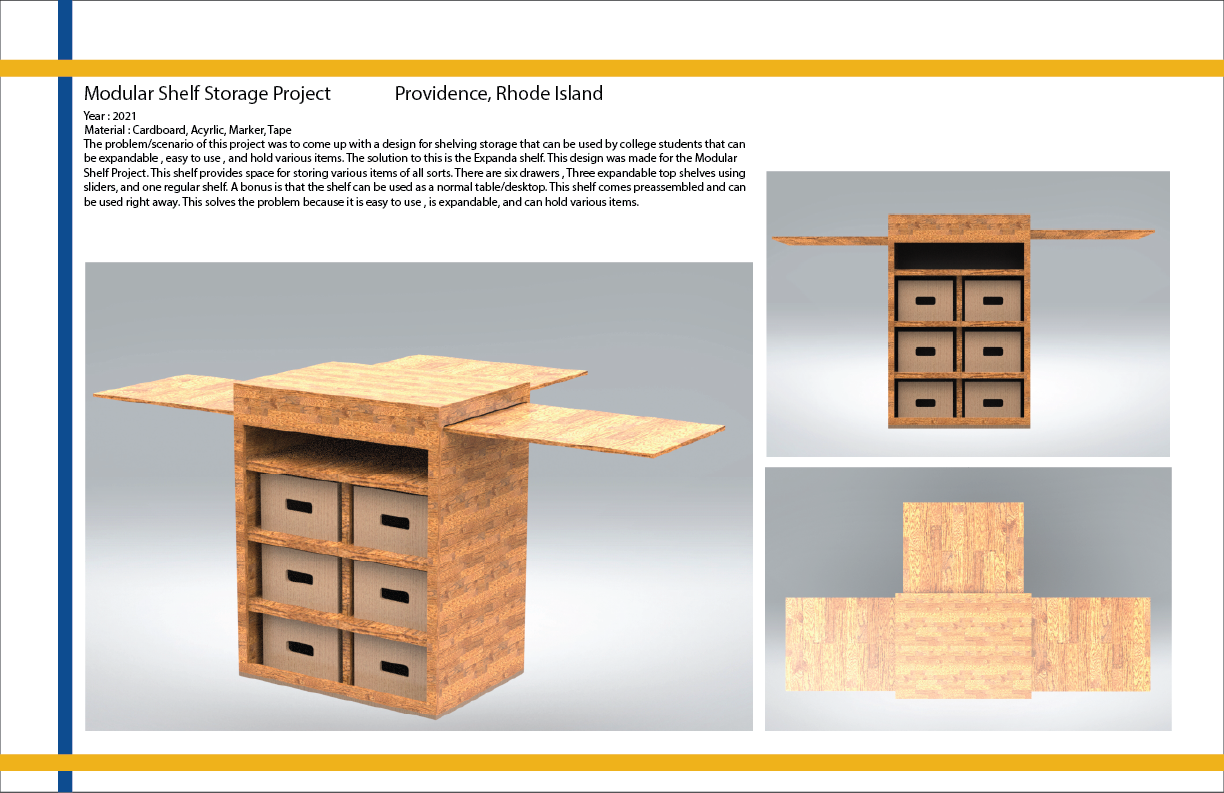
The modular storage concept tackles a common problem: everyday items (keys, wallet, chargers, tools) need a home, but fixed containers don't adapt when your needs change. This design uses stackable, nestable modules that snap together in different configurations.
Each module serves a single purpose — holding one category of items — and the physical connection system lets users build exactly the storage footprint they need, then rearrange when priorities shift. The form language is clean and geometric, designed to sit on a desk or shelf without visual clutter.
Wearable Storage
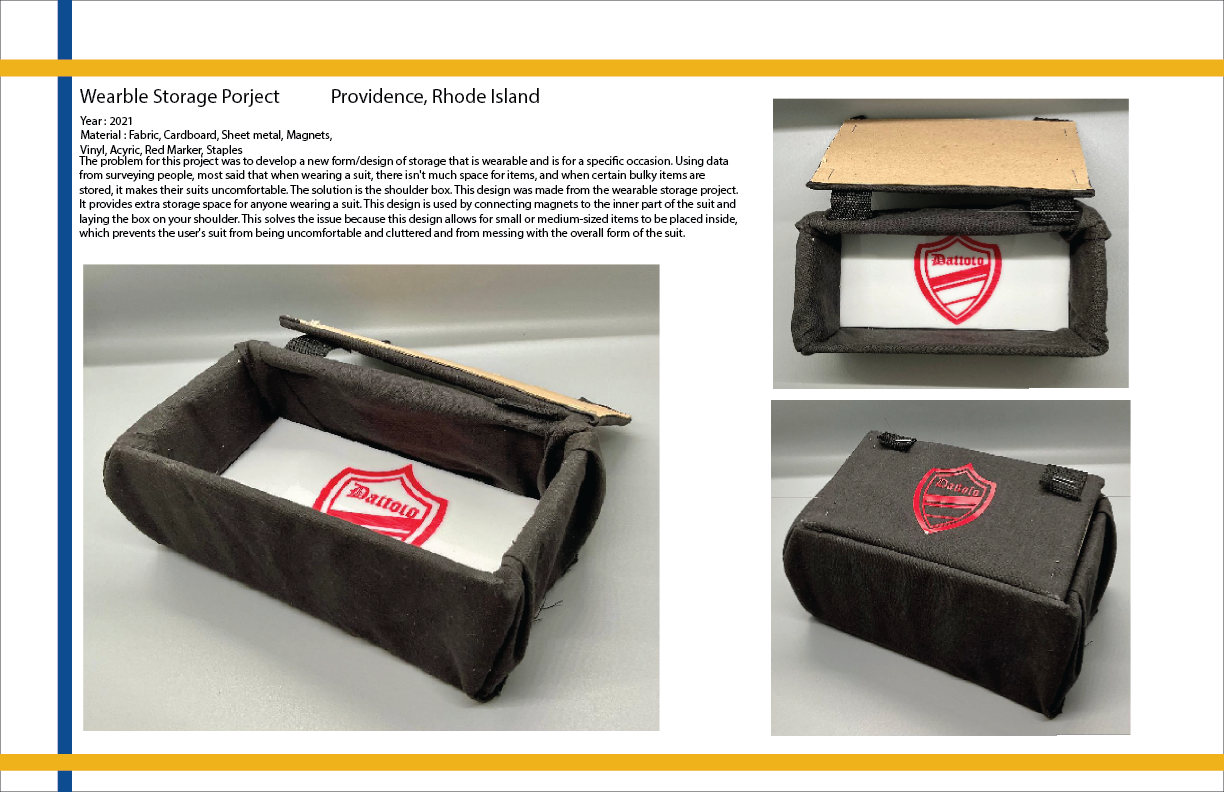
The wearable storage concept focuses on hands-free carry for everyday essentials. Rather than stuffing pockets or carrying a bag for a few small items, this body-mounted unit keeps things accessible without occupying your hands.
The design prioritizes weight distribution, quick access, and a secure closure that doesn't slow you down. It's aimed at situations where a full bag is overkill but pockets aren't enough — commuting, walking the dog, quick errands.
Project Gallery